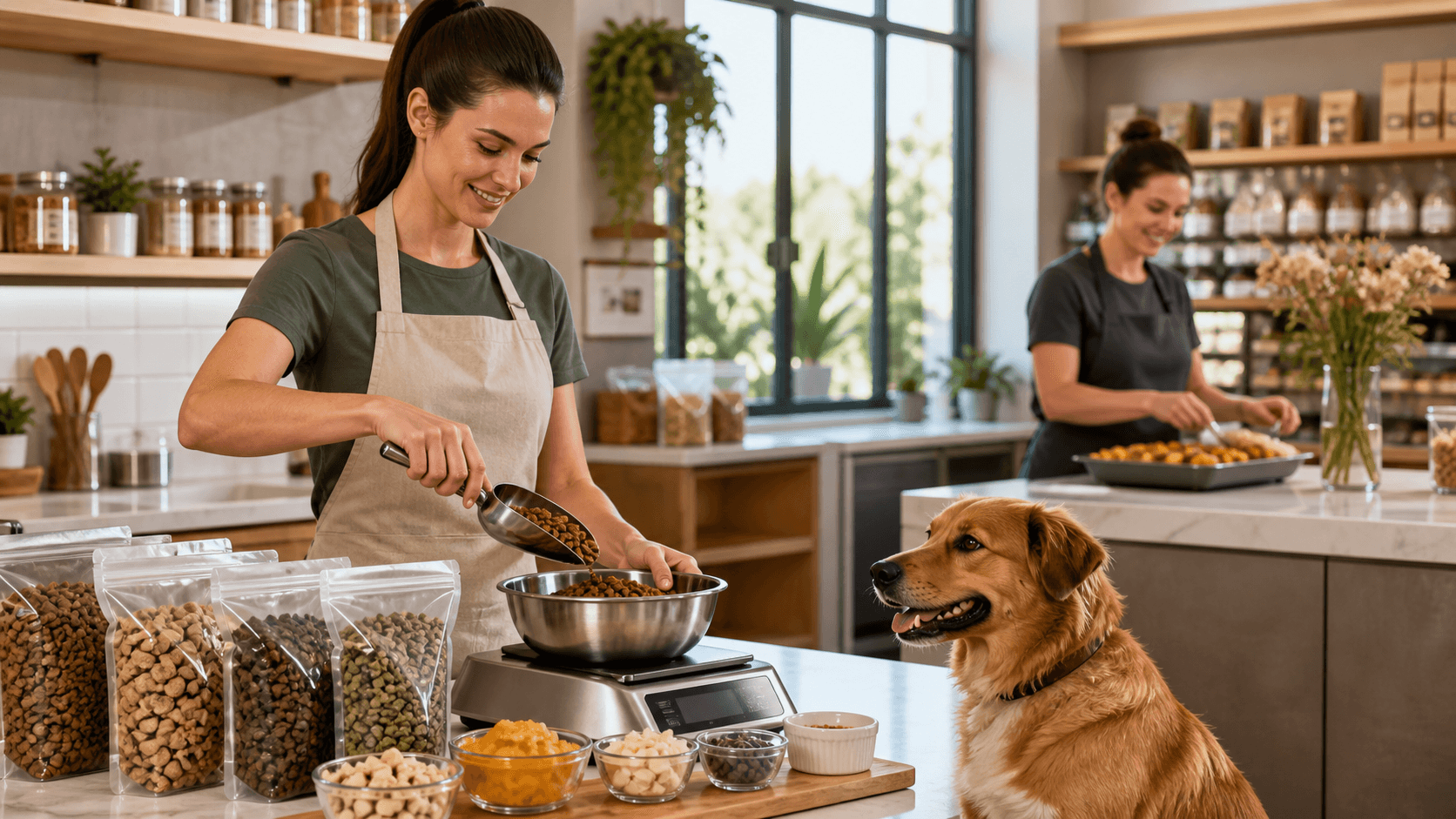
Feeding Kibble with Confidence
Feeding your dog should feel straightforward and stress-free. You want something healthy that fits your budget and keeps your dog happy, with a bowl that gets cleaned out every time. Dry kibble can absolutely do that when you choose the right formula for your dog and your wallet.
At Nauti Dog Barkery in Dallas, we focus on helping families feed kibble with confidence. In this guide, we will walk through what makes a healthy dry food, how grain-free kibble fits into the bigger picture, how to balance nutrition and budget, and how to pick a formula that actually suits your dog's age, size, and lifestyle.
Why Dry Kibble Still Deserves a Place in Your Dog's Bowl
Dry kibble often gets a bad reputation, but high-quality options are carefully formulated to provide complete and balanced nutrition. Reputable manufacturers build recipes around specific nutrient profiles so dogs get the right balance of protein, fat, vitamins, and minerals in every bowl. That balance is what helps support energy, muscle tone, skin and coat, and overall health.
Kibble is also practical. It stores well, is easy to portion, and fits a wide range of budgets. For busy households, that convenience can be the difference between staying consistent with feeding and scrambling at the last minute.
At our shop, we pre-screen the dry foods we bring in, so you are not sorting through poor-quality choices. If it is on our shelf, it has already cleared our basic standards for ingredients and overall value. From there, we help you narrow down which of those good options is the best match for your dog.
What Makes a Kibble Healthy Versus Just Cheap
Not all kibble is created equal. Some low-cost foods are made to hit the lowest possible price, which usually means lower quality ingredients and more fillers. On the other hand, there are budget-conscious formulas that still use better proteins and thoughtful recipes while staying friendly to your wallet.
When you read a kibble label, a few details matter most.
- Clear, named animal proteins as the first ingredient
- Appropriate fat content for your dog's age and activity level
- Digestible carbohydrate sources instead of mystery fillers
- Ingredient lists without artificial colors
Ingredient transparency is a big deal. Long lists filled with vague terms like "meat meal" without specifying the animal source, or an overload of by-products and colorings, can be a sign that the food is more about cost-cutting than nutrition.
This is also where grain-inclusive and grain-free kibble come in. Grain-free kibble is often marketed as automatically better, but that is not always true. Grain-inclusive formulas can be an excellent option when they use wholesome grains, and grain-free is simply another style that may suit some dogs better than others. The real difference is in what ingredients are used and how well your dog does on the formula.
Grain-Inclusive, Grain-Free, and Everything in Between
Grain-inclusive kibble uses grains like rice or oats as part of the carbohydrate source, along with meat or fish proteins. Grain-free kibble replaces those grains with other carbs, such as potatoes, peas, or lentils, while still centering on animal proteins.
There are many myths around grain-free kibble. It is not inherently superior, and it is not automatically dangerous. For many dogs, either style can work well, as long as the food is well made and balanced. Some dogs may thrive on a grain-inclusive recipe, while others seem to do better when grains are removed and replaced with other sources of carbohydrates.
Here are some examples of when each style might make sense:
- Grain-inclusive: Generally healthy dogs with no signs of grain sensitivity
- Grain-free kibble: Dogs that show skin or digestive issues on grain-inclusive diets, when a veterinarian suggests a trial
- Either style: Owners who want options to rotate foods while staying within a budget
At our store, we curate both grain-inclusive and grain-free choices at different price levels. That way, we can talk together about your dog's history and your budget, then guide you toward a formula that fits on both counts.
Balancing Nutrition and Budget Without Sacrificing Quality
A healthy diet does not have to be the most expensive bag on the shelf. The goal is to find the best quality you can comfortably afford, then feed it consistently. For most families, that means setting a realistic monthly food budget and working within it.
A few practical ways to upgrade without overspending include:
- Choosing formulas with better-quality proteins, even if you stay in a mid-range price point
- Rotating between compatible kibbles so your dog gets variety while you watch for sales
- Paying attention to calorie density, so you feed the right amount and do not overuse the bag
- Focusing on foods that agree with your dog's digestion, so you are not wasting money on upset stomachs or uneaten meals
At Nauti Dog Barkery, we aim to stock kibble that hits a sweet spot between nutrition and affordability. Many of our bags are at or below big-box prices, but we are still selective about ingredients. Our staff can help you compare formulas side by side, so you can see where your money is going and which bag gives you the best value for your particular dog.
Customizing Kibble for Your Dog's Age, Size, and Lifestyle
Every dog has different needs. Puppies need more calories and specific nutrients to support growth, while seniors may do better on foods with adjusted calories, added joint support, or easier-to-digest recipes. Adult dogs land somewhere in the middle, with needs that vary based on activity level.
Breed size also matters. Small dogs often prefer smaller kibble pieces, while large-breed dogs can benefit from formulas that support joint health and maintain a steady growth rate in youth. Kibble shape and size can influence how comfortably your dog eats and how well they chew.
Health considerations play a big role too. Sensitive stomachs, allergies, or chronic issues may steer you toward grain-inclusive, grain-free kibble, limited-ingredient diets, or specific proteins like fish or turkey. We listen to what is really going on at home, from energy levels to stool quality, then factor in your veterinarian's input and your budget to suggest realistic options.
How Nauti Dog Barkery Makes Feeding Easy and Affordable
Our goal is to make feeding high-quality kibble feel simple, not overwhelming. We only bring dry foods into the store that meet our standards, so you are not sorting through "good" and "bad" options. No matter which bag you choose from our shelves, you can feel comfortable that you are bringing home a solid, thoughtful formula.
We keep a range of curated brands and categories, including grain-inclusive and grain-free kibble, holistic-style formulas, and value-conscious lines. This variety allows us to help families at different price points without compromising on core quality. We care about our local community, so we do our best to keep pricing affordable for families right here in Dallas.
To make things even easier, we offer free delivery to surrounding neighborhoods. That means you can stick with the kibble that works for your dog without worrying about extra trips or extra fees. With the right information and the right partner in your corner, feeding healthy kibble at a fair price becomes very achievable.
Help Your Dog Thrive With Better Nutrition Today
Give your pup the wholesome support they deserve with our carefully crafted grain-free kibble. At Nauti Dog Barkery, we prioritize quality ingredients that are gentle on sensitive stomachs while still delivering great taste. Explore our recipes to find the right fit for your dog's needs, from daily meals to training rewards. Make the switch today and see how a smarter bowl can help your dog feel their best.